You might have seen headlines recently claiming that Earth is switching to a 25-hour day. While the idea of having an extra hour to sleep or work sounds appealing, the reality is a bit more complex than a sudden schedule change. Scientists confirm that our planet is indeed slowing down, but the process is incredibly slow. The transition to a longer day is happening right now, yet it is so gradual that you will not notice it on your watch anytime soon.
Table of Contents
The Tug of War Between Earth and the Moon
The primary reason for this slowdown is the Moon. As the Moon orbits our planet, its gravity pulls on Earth’s oceans, creating the tides we see at the beach. This gravitational interaction acts like a brake on Earth’s rotation. The friction caused by the moving water drags against the ocean floor, which slowly consumes the planet’s rotational energy. As Earth loses this energy, its spin slows down, causing the days to lengthen by tiny fractions of a second over centuries. This same process also pushes the Moon slightly farther away from us each year.
Why 24 Hours Is Not a Fixed Standard
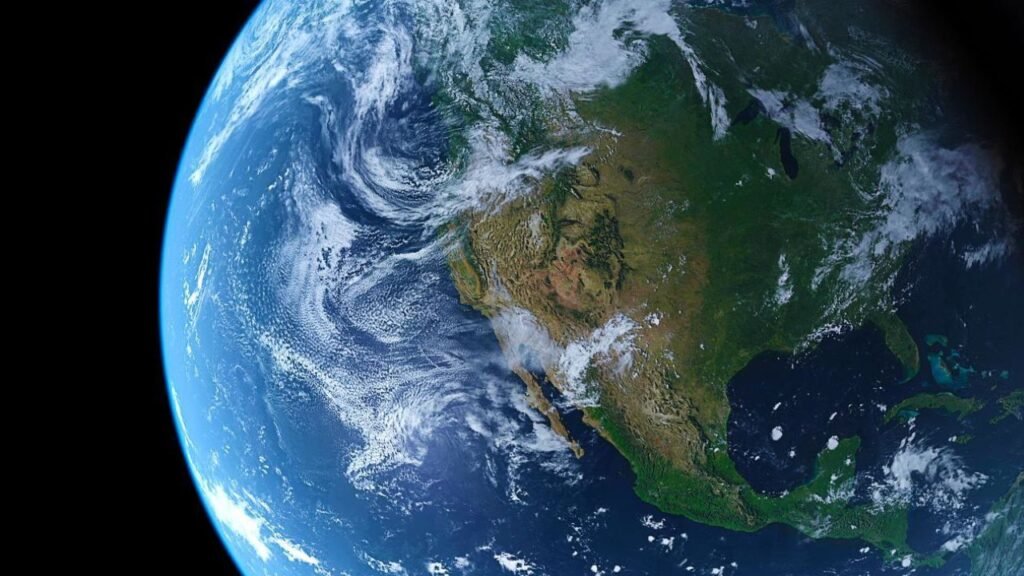
We are taught that a day is exactly 24 hours, but this is a human approximation rather than a precise astronomical fact. If you measure the rotation of Earth relative to distant stars, a period known as a sidereal day, it actually takes about 23 hours, 56 minutes, and 4 seconds. The 24-hour solar day we use for our calendars requires Earth to rotate a little extra so the Sun appears in the same position in the sky. Because the speed of rotation is not perfectly constant, timekeepers have to occasionally adjust our clocks to keep them in sync with the planet.
The Timeline for a 25-Hour Day
Many people want to know exactly when we will officially have 25 hours in a day. The answer lies in the distant future. Current scientific estimates suggest that at the current rate of deceleration, it will take approximately 200 million years for Earth to reach a 25-hour day. This means that for the rest of your life, and for millions of generations to come, the 24-hour cycle will remain the standard. The slowdown equates to about 1.7 to 2.3 milliseconds added to the length of the day every century.
Other Factors Influencing Rotation
While the Moon is the biggest influence, other factors also play a role in how fast Earth spins. Major earthquakes, atmospheric changes, and the melting of polar ice caps can redistribute mass around the planet. When mass moves toward the equator or the poles, it affects the spin rate much like a figure skater pulling in their arms to spin faster. Research from experts like Norman Murray at the University of Toronto suggests that in the deep past, atmospheric resonance actually counteracted the Moon’s drag, keeping the day length stalled at around 19.5 hours for over a billion years.
Key Mechanisms Affecting Day Length
- Tidal friction from the Moon is the primary brake on Earth’s rotation.
- The Moon moves about 1.5 inches away from Earth annually as it steals rotational energy.
- Atmospheric thermal tides driven by the Sun can theoretically speed up rotation.
- Glacial isostatic adjustment changes the shape of the planet and affects spin speed.
- Core-mantle interactions inside Earth create irregular fluctuations in day length.
Projected Changes in Earth’s Day Length
The table below illustrates the estimated length of a day on Earth across different geological eras, showing just how slow this process is.
| Era / Time Period | Approximate Day Length |
| Formation of Earth (4.5 Billion Years Ago) | ~6 to 10 Hours |
| Proterozoic Eon (1.4 Billion Years Ago) | ~18.7 Hours |
| Era of Dinosaurs (70 Million Years Ago) | ~23.5 Hours |
| Today (Present) | 24 Hours |
| Future (200 Million Years from Now) | 25 Hours |